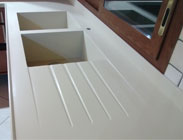
How a Corian sink is made
Bowls, draining grooves and falls: what you see and what makes the difference
A DuPont™ Corian kitchen worktop with an integrated sink is not made of pieces set side by side: it is a single body. But for it to work properly — and not only to the eye — three operations matter that the client will never see.
1. The draining grooves
The grooves of the draining area are made by cutting into the material on CNC machinery, then finished by hand. The drip edge is worked into the rim of the top, again out of the same sheet.
2. The bowls and the falls
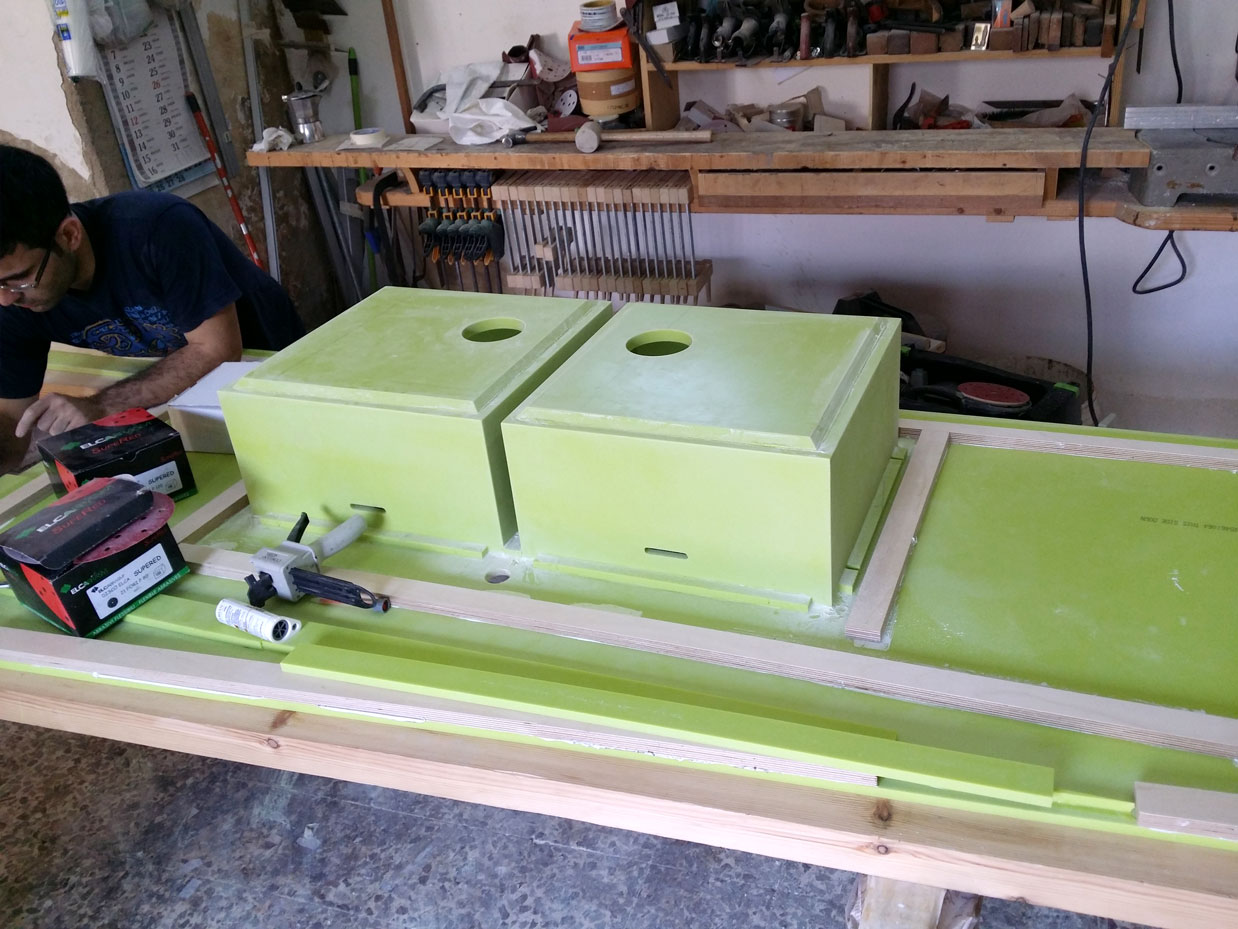
The bowls are made to measure, because standard DuPont™ Corian sinks exist in four colours only: Bone, Cameo White, Glacier White, Vanilla. Outside those, they have to be built.
The delicate part is the bottom of the bowls: it has to be built with the right falls, so that the water drains completely towards the waste with nothing left standing. It is an invisible detail that decides whether the sink stays clean by itself or not.
Please note: the method shown here — with the bottom of the bowls bonded — is not the one we recommend. It was carried out at the insistence, and under the responsibility, of the designer and the client.
The problem appears above 140 °C: at those temperatures the different parts expand by different amounts and the joint can give way. It therefore concerns kitchen sink bowls, where boiling water may be poured or a pan set down — not washbasins or bathtubs, which never reach those temperatures.
For kitchen sinks Arco Arredo recommends bowls made with no bonding on the bottom. The jointing systems designed specifically for this problem are to be preferred: they cost more, but they exist to solve it.
In any case, particular care must go into building the bottom of the bowls, to give the right falls and obtain a correct and complete flow of water towards the waste.
3. The sanding
The velvety touch typical of Corian worktops does not come from the material alone: it comes above all from the sanding. It must be done with professional machinery following the DuPont™ protocol, going through every abrasive grade in turn, without skipping any.
Leaving out any of the abrasive steps, even partly, spoils the final appearance and leaves a surface micro-porosity, which makes cleaning the worktop slower and harder.
This is where a certified fabricator differs from someone who merely cuts sheets. The difference does not show on the first day: it shows after a year of use.
From the sheet to the finished worktop
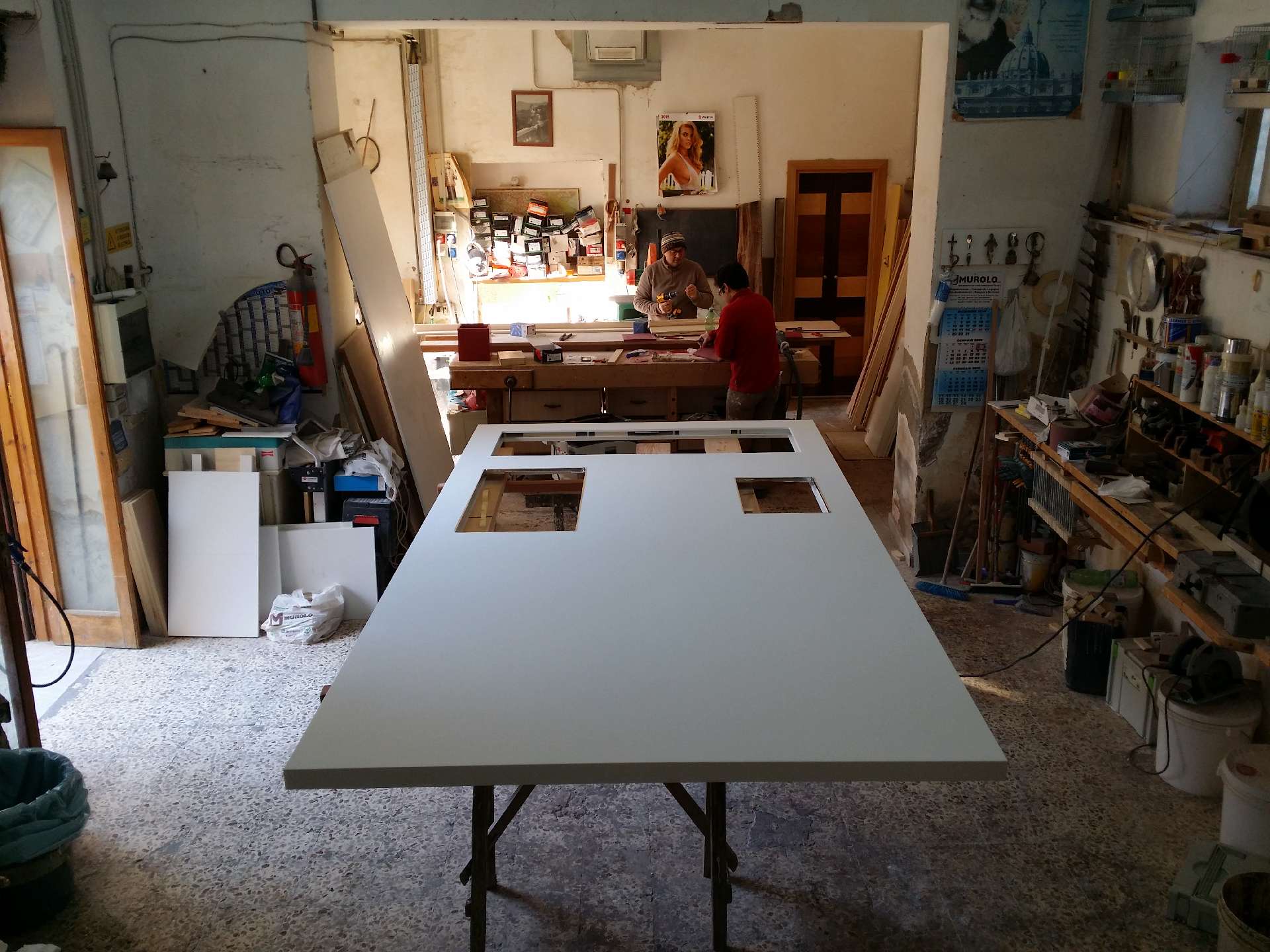
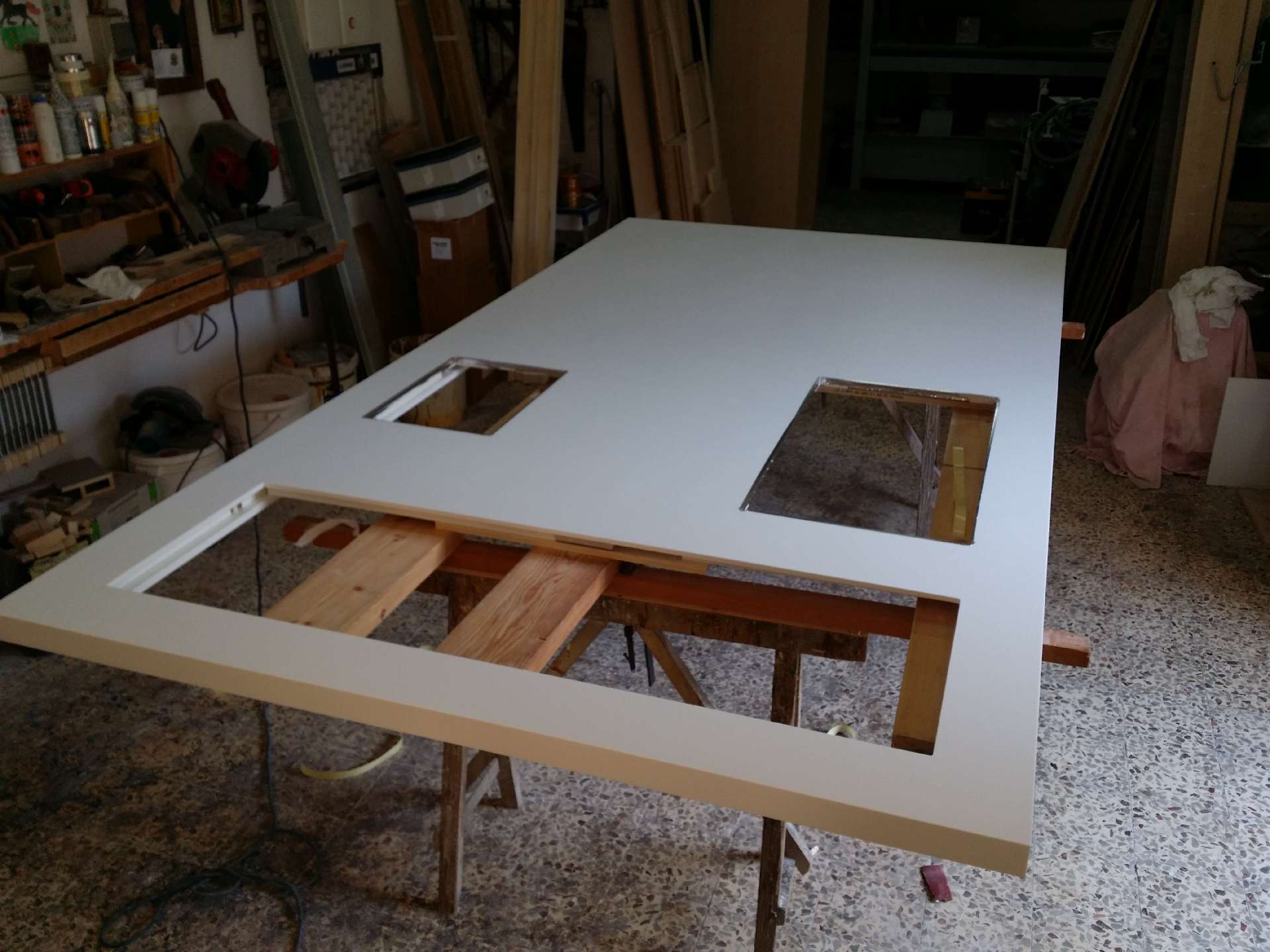
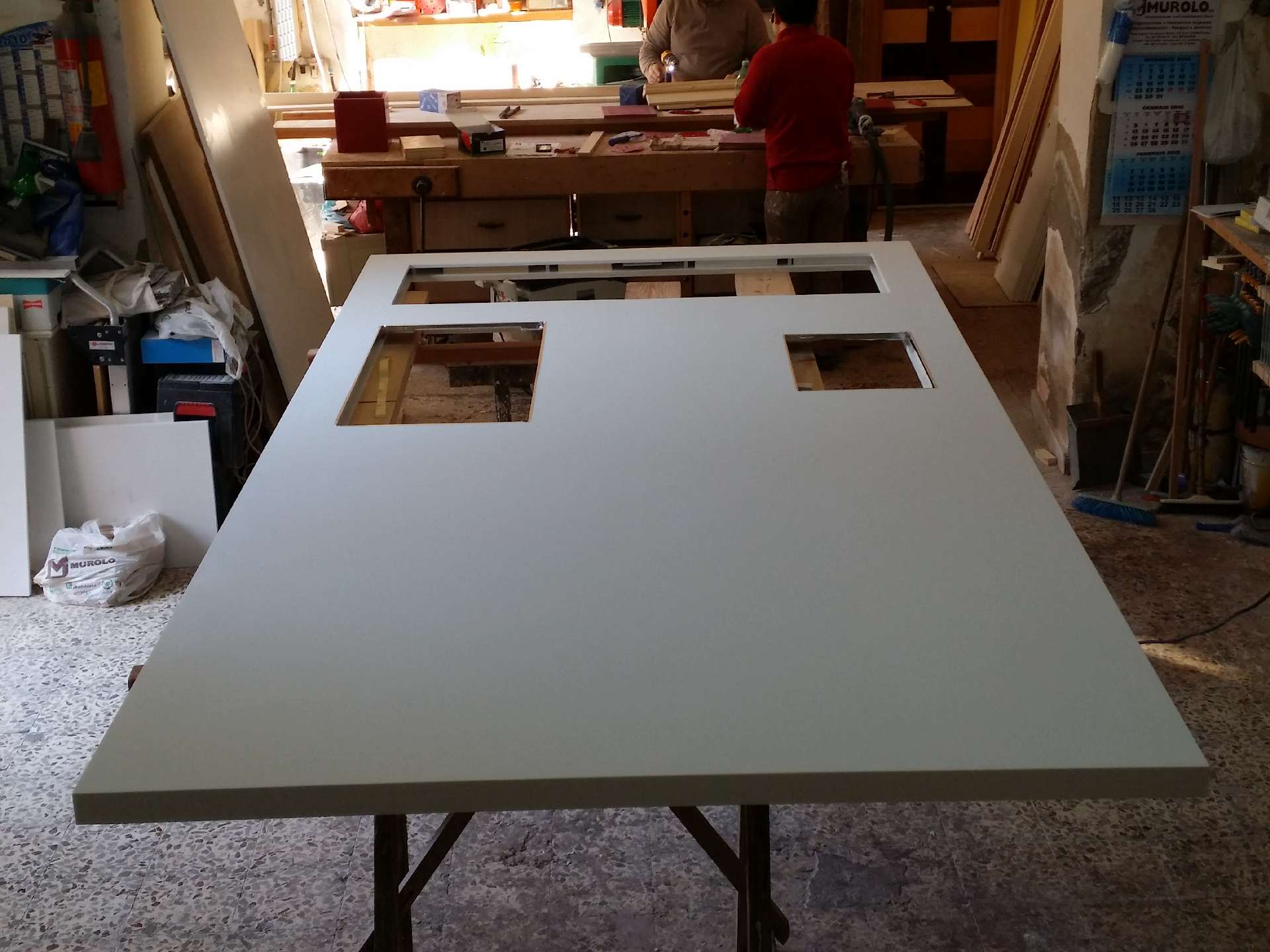
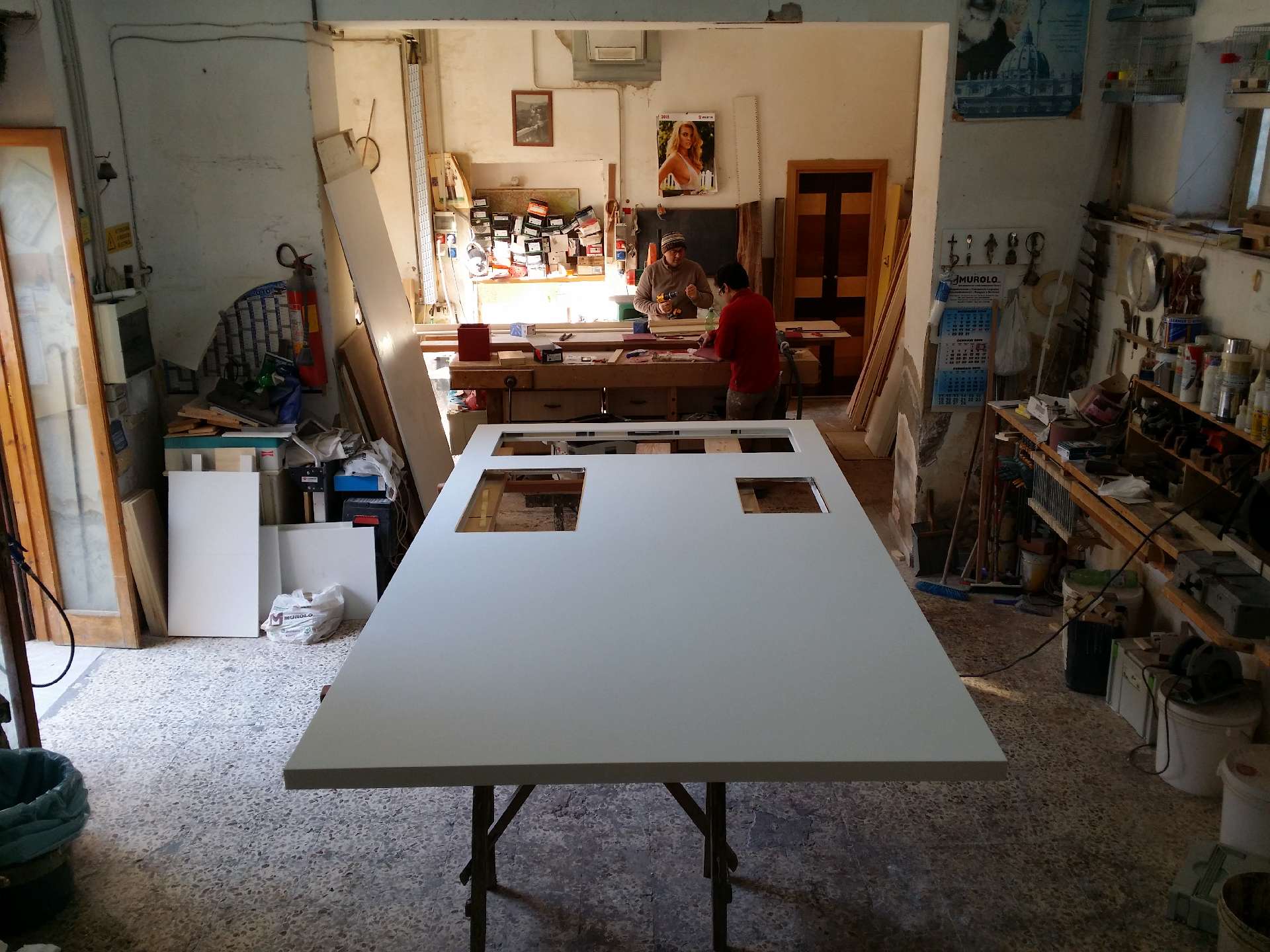
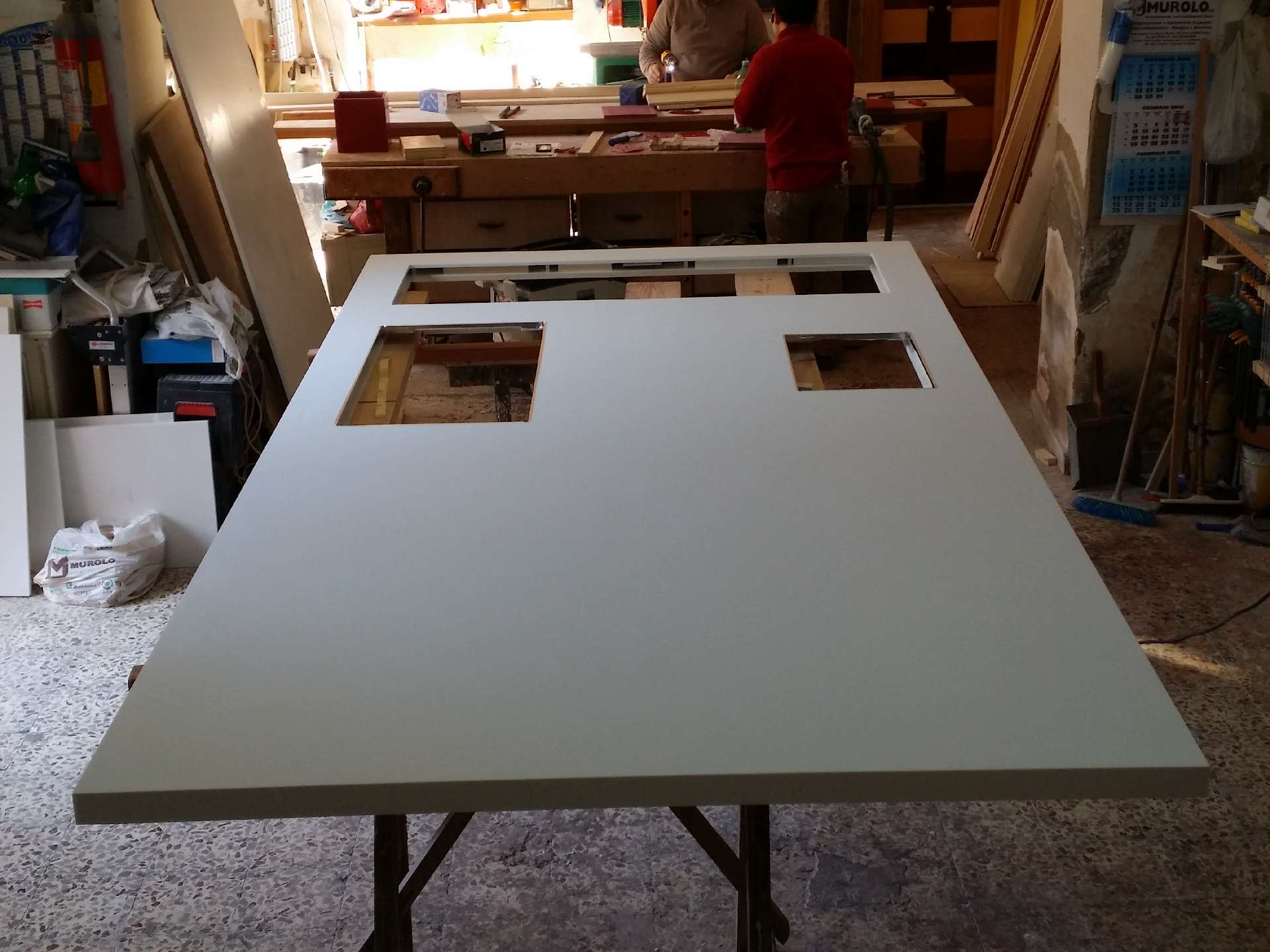
Arco Arredo uses DuPont™ Corian sheets and adhesives exclusively, with the company’s approval to use the brand.